Serving Fort Washington, MD and surrounding areas. (301) 872-6637
Cracked floors, damp concrete, and shifting slabs are fixable - but the fix starts with a properly built foundation from day one.
Cracked floors, damp concrete, and shifting slabs are fixable - but the fix starts with a properly built foundation from day one.
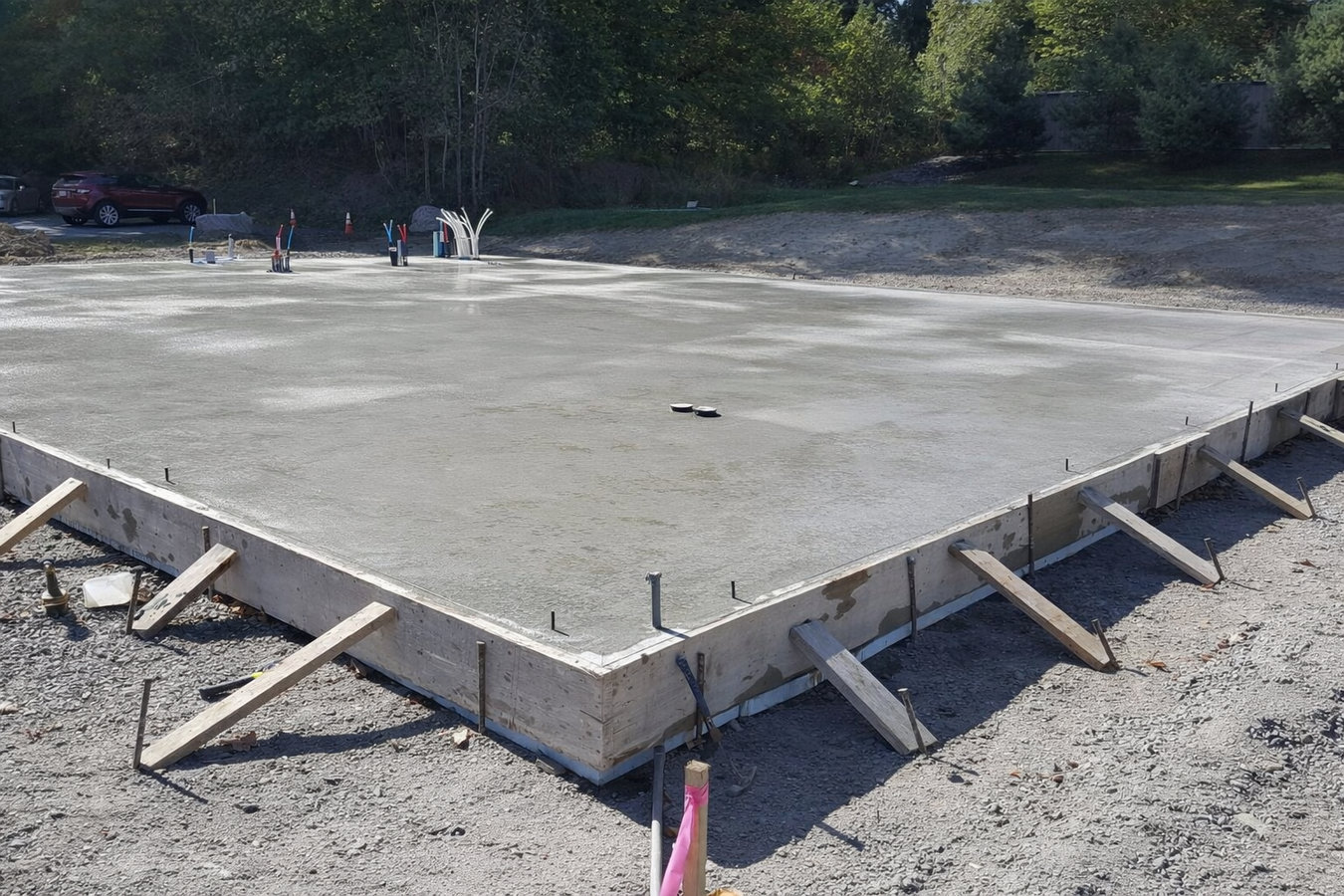
Slab foundation building in Fort Washington means grading the site, installing a gravel base and moisture barrier, setting steel reinforcement inside forms, and pouring the concrete pad that becomes your floor and foundation - most residential jobs take three to five days of active work, with a curing period following before framing can begin.
Whether you are building a new addition, replacing a deteriorating slab, or starting from the ground up, the quality of that concrete base determines how everything above it performs. Fort Washington homeowners dealing with settling or moisture problems often trace it back to a slab that was rushed or built without accounting for the area's clay-heavy soil. If you are also planning outdoor work, our concrete footings service pairs naturally with slab foundation work.
Small hairline cracks in concrete are common and usually harmless. But cracks wider than a pencil line, cracks running in a long diagonal pattern, or cracks that seem to be growing over time signal that the slab may be shifting. In Fort Washington's clay soil this kind of movement is not unusual, but it needs to be evaluated before it gets worse.
When a slab shifts, the walls and door frames above it shift too. If doors that used to swing freely now stick or drag, or if you notice gaps forming at the corners of window frames, the foundation below may be moving. This is one of the clearest signs homeowners can spot without any special tools or expertise.
Fort Washington gets significant rainfall, especially in spring, and the area's clay soil does not drain quickly. If your concrete floor feels damp, shows water stains, or develops a musty smell after a rainstorm, moisture is likely wicking up through the slab. This often means the moisture barrier has failed or was never properly installed.
If the floor visibly slopes toward one side or you feel a noticeable dip when walking across it, the slab may have settled unevenly. In older Fort Washington homes built on clay soil, this kind of settling can develop gradually over decades and is worth having a professional assess before the problem accelerates.
Our slab foundation work covers the full scope from ground prep through the finished pad. We handle site clearing and grading, gravel base installation, moisture barrier placement, steel reinforcement setup, and the concrete pour itself - all in the correct sequence and with Prince George's County permits pulled before work begins. If you need a new slab for an addition, a detached garage, or a full home rebuild, we size the reinforcement and thickness to match your load requirements. Homeowners adding a new structure often benefit from pairing this work with our concrete footings service to ensure the entire base system is built to the same standard.
For homeowners replacing a deteriorating slab, we start by removing the old concrete, assessing the soil condition underneath, and correcting any drainage or compaction issues before the new pour. This is also a natural point to look at related concrete work around your property - our foundation installation service covers deeper basement and crawl space foundation work for projects that go beyond a flat slab. No matter the scope, we provide a written estimate and clear timeline before any work begins.
Best for homeowners building an addition, garage, or new structure that needs a permanent concrete base from scratch.
Suited to homeowners whose existing slab has cracked, settled, or developed moisture problems beyond what repairs can fix.
Ideal for homeowners adding a detached or attached garage who need a properly reinforced slab rated for vehicle loads.
Right for sheds, workshops, sunrooms, and other outbuildings that need a flat, durable concrete base to sit on.
Fort Washington sits in the Coastal Plain region of Prince George's County, where clay-heavy soil dominates. That soil absorbs moisture and swells, then dries out and shrinks - a cycle that repeats every year. A slab that was not designed with this behavior in mind will often show cracks or uneven settling within a few years. Proper soil compaction, correct slab thickness, and a quality moisture barrier are not optional extras here - they are the baseline for a foundation that holds up. Fort Washington's proximity to the Potomac River also means some lots have elevated groundwater levels, which requires additional attention to drainage before the pour begins. Homeowners in nearby Camp Springs face many of the same soil and drainage conditions.
Many Fort Washington neighborhoods were developed between the 1960s and 1980s, so homeowners here are often replacing a slab rather than building on raw land. That means demolition, soil reassessment, and drainage correction happen before a single drop of new concrete is poured. Prince George's County also requires a building permit for all new slab work - which means a county inspector will review and sign off at key stages. Homeowners in Upper Marlboro fall under the same county permit requirements. We handle the permit application on your behalf so you never have to figure out the county process on your own.
We respond to every inquiry within one business day. We will ask a few basic questions about your project and schedule a site visit - we do not give firm pricing over the phone because site conditions matter too much here.
We visit your property, check the soil, measure the area, and review drainage. You get a written estimate with a clear scope and timeline - no surprises and no pressure to sign the same day.
We apply for the Prince George's County building permit on your behalf. Once approved - typically one to three weeks - the crew arrives to grade the site, compact the base, and prepare for the pour.
The pour day is the most active part of the job. After the pour, the slab cures for at least a week before light use and about 28 days for full strength. The county inspector visits during this window. We schedule that inspection - you do not have to call anyone.
We respond within one business day, provide a written estimate after the site visit, and handle all Prince George's County permitting.
(301) 872-6637We work in Fort Washington's clay-heavy soil every season and know exactly what it takes - compaction depth, drainage grade, and slab thickness - to build a foundation that does not crack or shift within a few years. Local soil knowledge is built into every job we do here.
Every slab foundation job we take in Fort Washington goes through the Prince George's County permit process. We handle the application and schedule the required county inspection so your project is documented and compliant - protecting your home's value when you sell. Learn about PG County permits.
In Maryland's humid climate with Fort Washington's proximity to the Potomac, a properly installed moisture barrier under the slab is not optional. We treat it as a core part of every pour - not an upgrade you have to ask for - because skipping it leads to damp floors and mold problems that cost far more to fix later.
We walk you through what is happening before each phase starts - permit status, pour date, inspection schedule, and curing timeline. You will never have to chase us down to find out what comes next. That transparency is something our repeat customers consistently mention.
The combination of local soil expertise, proper permitting, and honest communication is what separates a slab that holds up from one that causes problems. Call us to talk through your project before you commit to anything.
Full basement and crawl space foundation work for new construction and replacement projects that go beyond a flat slab.
Learn MoreConcrete footings sized and placed correctly to spread load and keep your structure stable through Fort Washington's seasonal soil movement.
Learn MoreSpring project slots fill quickly - contact us now to lock in your estimate and start the permit process before the busy season.