Serving Fort Washington, MD and surrounding areas. (301) 872-6637
Your slope keeps washing away, and patching it is not working. We build concrete retaining walls that handle Fort Washington's clay soil and hard winters so your yard stays put.
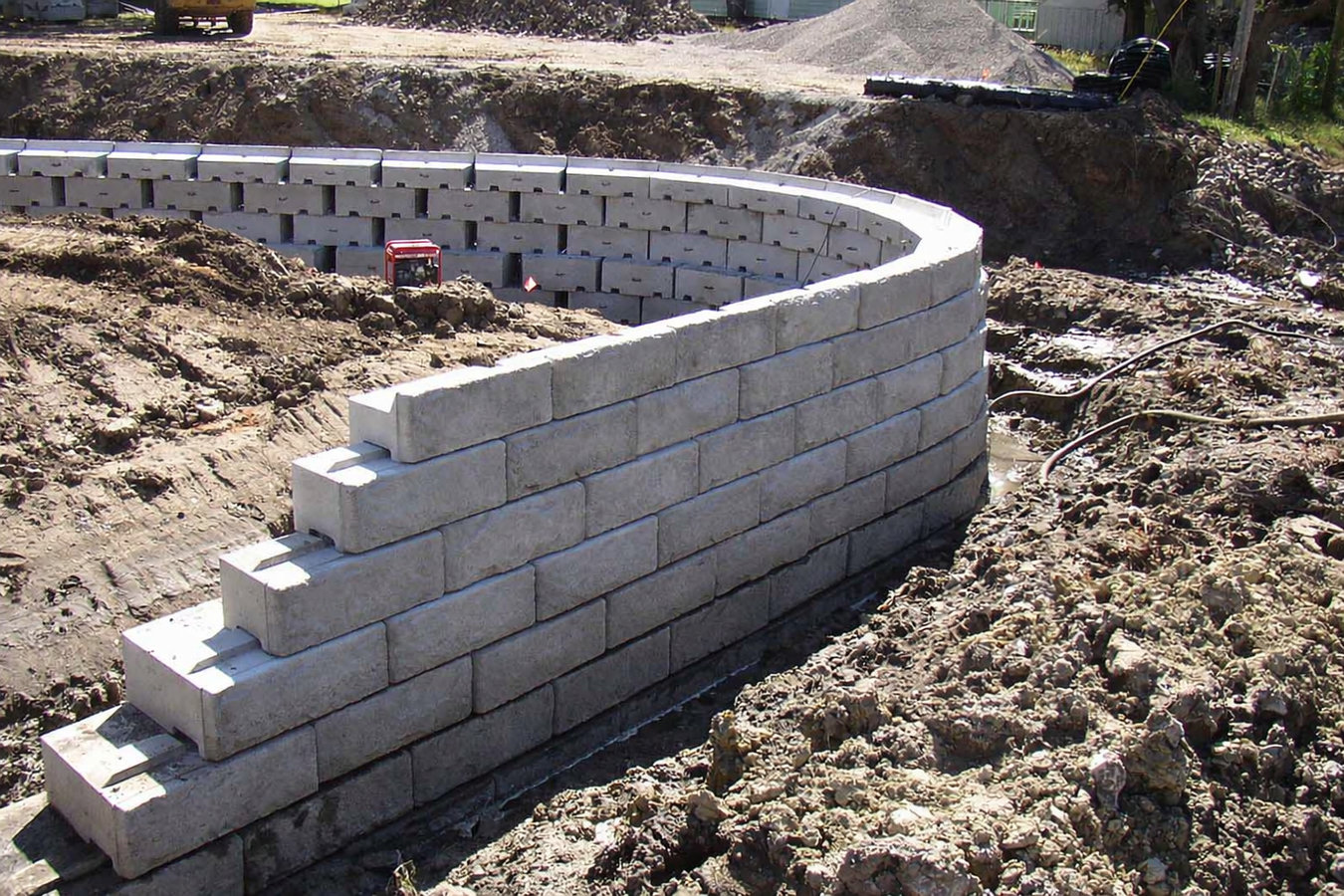
Concrete retaining walls in Fort Washington hold back sloped soil, prevent erosion, and create level usable yard space - most residential projects take two to five days on-site once permits are approved and the site is prepared.
If you have a slope that keeps losing ground after heavy rain, or an existing wall that is starting to lean, the underlying cause is almost always the same: water pressure building up behind the wall with nowhere to go. Fort Washington sits on clay-heavy soil throughout Prince George's County, and clay holds water in ways that sandy soil does not. That means every heavy rain adds pressure, and every dry spell releases it - a cycle that slowly defeats walls not built to handle it.
Beyond stopping erosion, a retaining wall can turn a slope that is too steep to use into a level terrace for a patio, garden, or lawn. If you are planning outdoor living space, our concrete floor installation service pairs naturally with a new terrace created by a retaining wall.
If bare patches keep appearing on a hillside in your yard after heavy storms, or mulch and topsoil keep migrating downhill, your slope is actively eroding. Fort Washington gets significant rainfall - especially in late spring and summer - and unprotected slopes lose ground steadily each season. A retaining wall stops that cycle and gives you back a stable, usable yard.
If a wall on your property is no longer perfectly vertical - even slightly - that is a sign the pressure behind it is winning. Leaning walls do not fix themselves; they continue to move until they fail. In Fort Washington's clay soil, this kind of movement often accelerates after a wet season, so if you notice it, get a professional look before the next winter.
When a slope directs water toward your house instead of away from it, you will often see standing water near the foundation after storms. Over time, that water works its way into your basement or crawl space. A retaining wall combined with proper grading redirects that flow and protects your foundation from chronic moisture before it becomes a structural problem.
Hairline cracks in an older wall are normal, but cracks wider than about a quarter inch - especially horizontal ones - suggest the wall is under stress it was not designed to handle. In Fort Washington, the combination of clay soil movement and winter freeze-thaw cycles accelerates this kind of deterioration. A crack that looks minor today can become a structural failure after one more wet winter.
We build cast-in-place concrete retaining walls for residential properties throughout Prince George's County. Every wall we pour includes a proper drainage system - gravel backfill and a perforated pipe - designed specifically for the area's clay soil conditions. Whether you need a short garden wall to define a planting bed or a taller wall to create a usable terrace, we size the footing depth and wall thickness to match the actual soil load on your property. If your project involves significant grading, we can also coordinate with our concrete floor installation work to create a finished outdoor space on the terrace once the wall is complete.
For projects requiring permits, we handle the application with Prince George's County DPIE on your behalf and include the permit timeline in the project schedule. We also work with homeowners who have HOA design review requirements and can provide documentation needed for that approval process. If your project site has large trees nearby, we assess root zones during the design phase - a detail that matters in Fort Washington's established neighborhoods where mature trees are common. We also offer concrete footings work that can be combined with retaining wall projects requiring deeper structural anchoring.
Suits homeowners who need a low wall to define planting beds, separate yard levels, or stop minor erosion on a gentle slope.
Suits homeowners who want to convert an unusable slope into one or more level terraces for a patio, garden, or play area.
Suits homeowners whose property grading directs water toward the house - the wall redirects runoff and protects the foundation from chronic moisture.
Suits homeowners with an existing wall that is leaning, cracked, or structurally compromised - we remove the old structure and build a new wall with proper drainage from the start.
Fort Washington sits in Prince George's County on largely clay-based soil. Clay expands when wet and contracts when dry, putting constant back-and-forth pressure on any structure buried in it. Combine that with the Washington metro area's freeze-thaw cycles from November through March - when water in the soil freezes, expands, and pushes against walls repeatedly - and you have a specific set of conditions that a contractor from outside this area may not account for. We build every wall here with footings below the frost line and drainage systems designed for clay, not the generic gravel-and-pipe approach that works fine in other soils.
Prince George's County also has a specific permit process through DPIE that affects project timelines - typically two to four weeks for approval on permitted walls. Many Fort Washington neighborhoods, particularly communities developed in the 1970s through 1990s, have active HOAs with design review requirements that are separate from county permits. Homeowners in Clinton, MD and Upper Marlboro, MD face similar soil and permit conditions, and we serve those communities as part of our regular service area.
We respond within 1 business day and schedule an on-site visit to walk your property. We look at the slope, soil, any existing structures, and how water moves across your yard - details that matter for an accurate quote.
You receive a written estimate with the wall's dimensions, drainage plan, footing depth, and a clear scope of work. If permits are needed, we include that cost and the two-to-four week county approval timeline upfront.
Once permits are in hand, we excavate, prepare the base, and pour the concrete. The drainage layer - gravel and pipe behind the wall - is installed before backfilling begins. This is the step most contractors skip, and the main reason walls fail.
We walk through the finished project together before we leave, confirm the drainage outlets are clear, and explain what normal settling looks like versus something worth calling about. The wall is fully cured and ready for landscaping within a few weeks.
Free on-site estimate. We handle permits with Prince George's County. No obligation.
(301) 872-6637We include a gravel layer and perforated drain pipe behind every wall we build. It is invisible once the job is done, but it is the single factor that determines whether a wall in Fort Washington's clay soil lasts decades or starts to fail in a few years.
Navigating Prince George's County DPIE is confusing if you have never done it. We handle the permit application and county inspections in our name, so your wall is fully documented. That matters when a buyer's inspector shows up at your home sale. Learn about PG County DPIE.
Fort Washington's freeze-thaw cycles require footings set below the frost line to prevent heaving and movement. We do not build to the minimum; we build to what this specific area's winters actually require, based on years of work in Prince George's County.
Maryland requires contractors doing home improvement work to hold a Maryland Home Improvement Commission license. Hiring a licensed contractor means they have met the state's requirements and you have legal recourse if something goes wrong. Verify contractor licenses here.
Every retaining wall we build in Fort Washington is backed by the same approach: proper drainage, footings sized for the frost line, and full permit compliance, the same standards a well-built block retaining wall should meet regardless of who builds it. That combination is what we stand behind on every project.
Once your retaining wall creates a level terrace, we can pour a concrete floor to finish the outdoor space.
Learn MoreFor retaining wall projects needing deeper structural anchoring, our footing work supports the load from the ground up.
Learn MoreSpring is the busiest season for concrete work in Prince George's County - call today and we will schedule your site visit and give you a clear written quote with no obligation.