Serving Fort Washington, MD and surrounding areas. (301) 872-6637
Fort Washington Concrete serves Temple Hills homeowners with concrete driveways, sidewalks, patios, retaining walls, and foundations. We know the postwar brick homes and clay soil conditions in this area, and we handle all Prince George's County permitting so you do not have to.
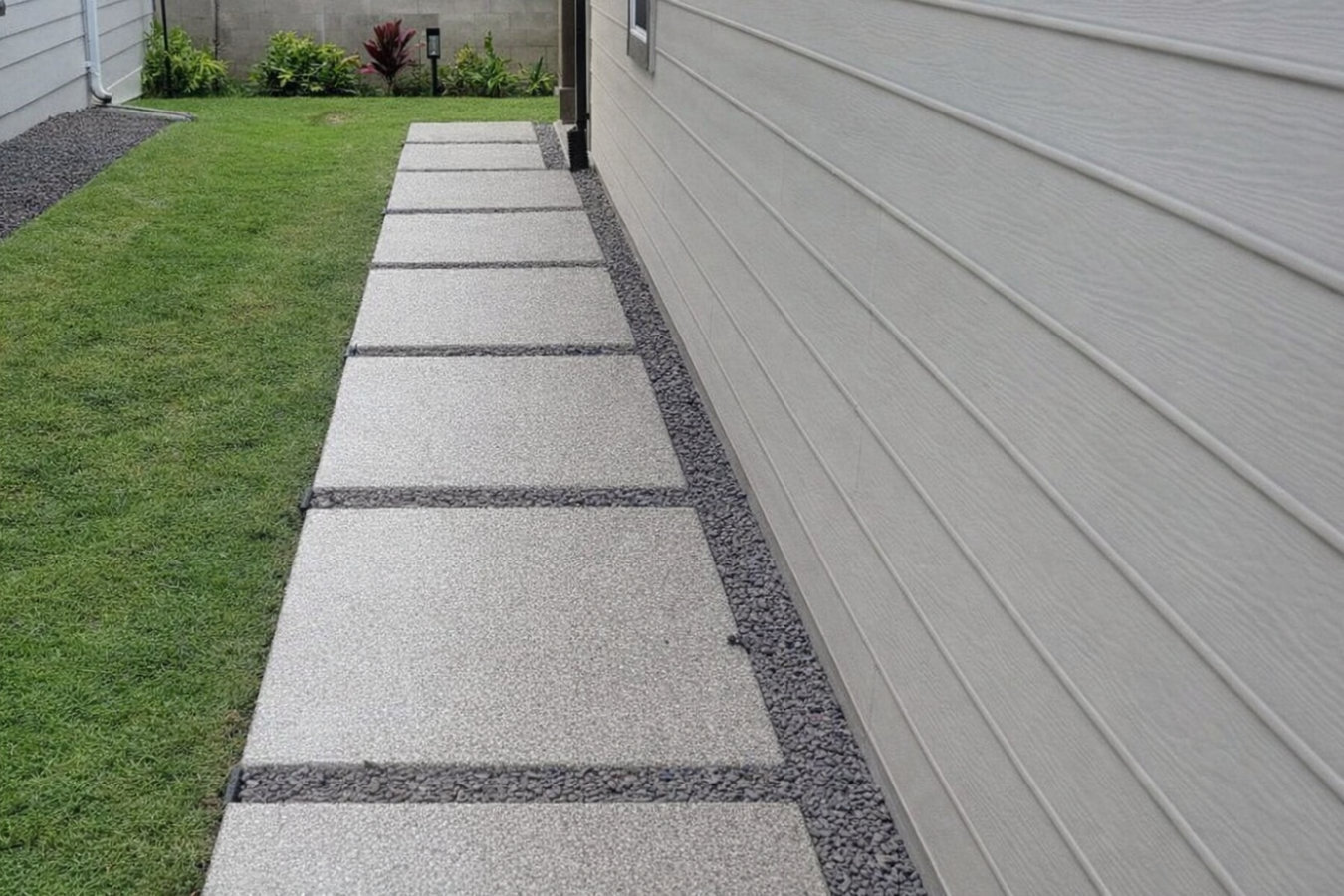
Temple Hills has deep-rooted mature trees that push under sidewalks and front walks year after year, creating uneven surfaces and trip hazards. We replace heaved and cracked sidewalks with properly jointed flatwork that gives tree roots room to move without breaking the surface. See our concrete sidewalk building service.
Many driveways in Temple Hills are original to homes built in the 1950s and 1960s - over 60 years of Maryland winters and clay soil movement have taken a toll. A properly poured replacement with a gravel base handles the seasonal ground shifts that crack older slabs.
Sloped yards in Temple Hills erode noticeably after the heavy spring rains that hit this part of Prince George's County. A concrete retaining wall stabilizes soil on a grade, stops erosion, and turns a sloped yard into usable flat space.
Temple Hills homes typically have real backyard space - a concrete patio puts that space to work. Concrete handles the hot, humid summers and wet winters here better than wood or pavers on sand, and it requires almost no maintenance once cured.
Front entry steps on Temple Hills homes from the 1950s and 1960s often show surface spalling and corner chipping from decades of freeze-thaw cycles. New concrete steps poured with reinforcement stay solid through the mid-Atlantic winters this area sees every year.
Older homes in Temple Hills were often built on block or poured-concrete foundations without modern waterproofing. Clay soil movement and poor drainage push moisture toward these foundations over time. We handle footing repair, foundation installation, and slab foundation work on the aging housing stock common here.
Most homes in Temple Hills were built during the postwar suburban boom of the 1950s and 1960s. The brick ranches and Cape Cods that dominate the neighborhood were built well, but they were not built to last forever without maintenance. After 60 or more years, the concrete driveways, front walks, and steps on these homes are often original - and they have been through decades of mid-Atlantic freeze-thaw cycles. Water seeps into the surface, freezes overnight, expands, and chips the concrete apart one winter at a time. By the time a homeowner calls us, the damage is often extensive enough that patching is no longer a practical option.
The heavy clay soil throughout Prince George's County, including Temple Hills, adds a layer of difficulty that contractors unfamiliar with this area do not always account for. Clay expands when it absorbs water and shrinks as it dries, putting constant lateral and upward pressure on any concrete poured directly on it. A gravel base of adequate depth is not optional here - it is what separates flatwork that lasts from flatwork that cracks within a few years. The area's mature tree canopy compounds the problem, with roots pushing under slabs and lifting sections over time. Temple Hills homeowners deal with both of these issues simultaneously on many jobs.
Our crew works throughout Temple Hills regularly, and we understand the local conditions that affect concrete work here. Temple Hills is an unincorporated community in Prince George's County, which means all permits are pulled through the county Department of Permitting, Inspections and Enforcement rather than through a separate city office. We work through the county DPIE process on every job and know the submission and inspection requirements for flatwork and structural concrete in this jurisdiction.
Temple Hills is a built-out, mostly residential community in the southern part of Prince George's County, roughly 10 miles southeast of downtown Washington, D.C. Branch Avenue (MD-5) is the main commercial corridor through the area, and the Capital Beltway runs along the northern edge. The neighborhood is made up largely of single-family homes on modest lots - brick ranches and Cape Cods from the postwar era that have real yards, driveways, and front walks. This is the type of housing stock we work on every week throughout the county.
We also work in the communities that border Temple Hills closely. Suitland, MD is just north of Temple Hills and shares the same postwar housing stock and clay soil conditions - we move between these neighborhoods regularly. Homeowners in Fort Washington, MD to the south also call us for the same types of projects, and the conditions there are closely related.
We reply within one business day. Most concrete jobs in Temple Hills require an on-site visit before we can give you an accurate estimate - the condition of your existing surface, drainage, and lot grade all affect the scope and price.
We come to your Temple Hills property, measure the work area, assess the existing surface and drainage, and walk you through your options. You get a written estimate with a clear scope before anything is agreed to. Cost questions are best handled here - we explain what drives the price on your specific job.
We submit the Prince George's County permit before your project starts. This typically takes one to two weeks through the DPIE. You do not have to visit the county office or track the application - we handle it for you.
Most residential concrete jobs in Temple Hills take one to two days of active work. We remove debris, clean the site, and walk you through curing instructions before we leave. Concrete needs seven days before vehicle traffic and 28 days for full curing strength.
Call us or submit the form below. We serve Temple Hills and all surrounding parts of Prince George's County, and we reply within one business day.
(301) 872-6637Temple Hills is an unincorporated community in the southern part of Prince George's County, Maryland, roughly 10 miles southeast of Washington, D.C. It developed rapidly during the 1950s and 1960s as federal workers and their families moved into the Washington suburbs. The housing stock reflects that era almost entirely - single-story brick ranches and Cape Cod homes on modest lots, most built between 1950 and 1975. Branch Avenue (MD-5) is the community's main commercial corridor, connecting Temple Hills to the Capital Beltway to the north and to the broader county road network. The neighborhood is a genuinely established community with a strong base of long-term homeowners who have invested in their properties for decades. Learn more about Temple Hills at the Temple Hills, Maryland Wikipedia article.
The area is mostly residential, with commercial activity concentrated on Branch Avenue and a few cross streets. Because Temple Hills is fully developed with little vacant land, construction activity here is almost entirely renovation and replacement - not new builds. That means homeowners are working with existing structures from 60 or more years ago, and a contractor who understands what those homes need is more useful than one who primarily works on new construction. Nearby communities like Oxon Hill, MD share similar housing ages and soil conditions, and we serve both regularly.
A durable, professionally poured concrete driveway built to last.
Learn MoreBeautiful concrete patios that extend your outdoor living space.
Learn MoreEngineered retaining walls that hold soil and elevate your landscape.
Learn MoreLevel, reinforced concrete floors for any interior or exterior space.
Learn MoreProperly poured slab foundations that support your structure for decades.
Learn MoreHeavy-duty parking lots poured to handle constant vehicle traffic.
Learn MoreCall us today or submit a contact form for a free estimate. We know Temple Hills and Prince George's County, and we are ready to start on your project.